Meridian Life Science Academic Site

dCTP

The ready-to-use molecular grade 100 mM solution of dCTP as lithium salts in purified water.

dCTP

High quality - >99% purity determined by HPLC, ideal for use in PCR reactions

Long shelf-life - no need for aliquoting

Convenient format – ready-to-use concentration

Enzyme free - DNase, RNase and Nickase free

Flexible sizes - custom, bulk and OEM sizes available

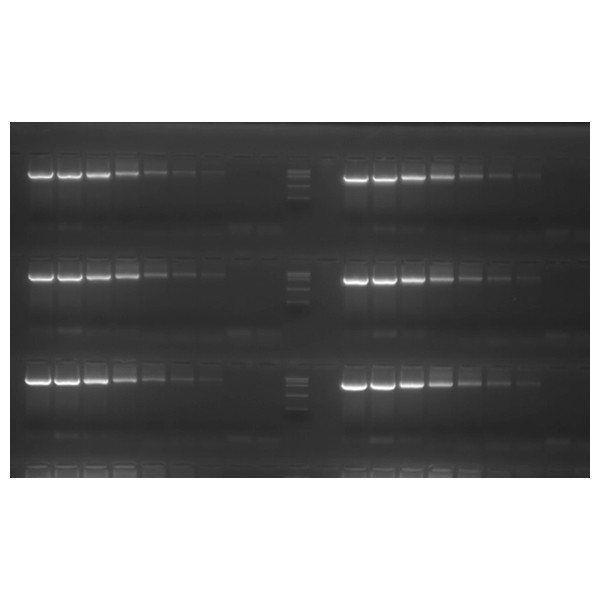
Fig. 1 Multiple rounds of freeze-thawing

Two different batches of dNTPs were freeze-thawed 5, 10 and 20 times and two-fold serial dilution was used in a PCR reaction. Both batches produced identical PCR products of 2 kb whether freeze-thawed 5 times or freeze-thawed 20 times.

Fig. 2 Long-term storage

Long-term stability of dNTPs was determined on dNTPs stored at -20oC for one year and two years. A two-fold serial dilution of these dNTPs was used in a PCR reaction to produce identical PCR products regardless of age of the dNTPs.

Product Description

Highly quality dNTPs are a vital requirement for successful PCR, as the presence of contaminating impurities will result in a decrease in amplification sensitivity and product yield. Meridian ultra-pure dCTP undergo highly stringent purification steps to give a greater than 99% purity and are tested for the absence of DNase, RNase, Protease, Nickase activity. It is then quality controlled in a variety of applications, ensuring that it is highly suitable for the most sensitive techniques.

Meridian dCTP is supplied as lithium salts in purified water, as lithium salts have greater resistance to repeated freezing and thawing cycles than sodium salts and remain sterile due to the bacteriostatic activity of lithium towards various microorganisms, giving greater reliability and an extended shelf life.

Applications

  • DNA amplification (standard, long-range, multiplex and high-fidelity PCR)
  • RT-PCR
  • qPCR
  • Genotyping
  • cDNA synthesis
  • DNA sequencing
  • DNA labeling
  • Mutagenesis
  • Expression profiling
  • Epigenetic analysis

Product Specification

Reagent 100 mM
dCTP 1 x 250 μL
Concentration 100 mM
Storage & Stability All components should be stored at -20°C upon receipt for optimum stability. Multiple freeze/thaw cycles should be avoided. For long-term storage, aliquoting is recommended.

When stored under the recommended conditions and handled correctly, full activity of the reagents is retained until the expiry date indicated on the outer box label.

Shipping Conditions Shipped on Dry or Blue ice.

Product Ordering

Cat. No.              Size

BIO-39038           25µmol

Product Support Material

View all Documents

We’ve started building a collection of short written and video reviews that we share onl...

FAQs:

dCTP

Why is the purity of dNTPs important?
dNTPs or deoxynucleotide triphosphates are the "building blocks" for DNA. Purity and stability of dNTPs are two of the essential factors to achieve a successful PCR. The use of a highly purified dNTP preparation is particularly recommended for sensitive techniques such as long-range PCR, RT-PCR, multiplex PCR, mutagenesis experiments and real-time applications. The purity of dNTPs is also important when the starting amount of template is minimal.
How are Meridian dNTPs supplied?
dNTPs can be supplied as either a mix or a set. The mix is presented in a single tube containing a premixed solution of dATP, dCTP, dGTP and dTTP. This solution is ready for use and is optimized for PCR and other applications. The set contains four separate tubes, one for each deoxynucleotide. dNTPs can be supplied in lyophilized form or in solution as lithium salts.
Is it better to use a pre-dispensed dNTP mix rather than a set?
Yes. A factory pre-dispensed and certified dNTP Mix preparation offers added convenience by minimizing pipetting steps and errors, which could lead to concentration imbalances. And it can be added directly to amplification reactions. Using a dNTP Mix ensures reproducibility in your experiments.
Which PCR inhibitors can be present in a dNTP preparation that is not ultra-pure?
Your PCR assay can be dramatically affected by a dNTP preparation containing inhibitors, which have resulted from an inadequate manufacturing process. Several parameters must be taken into account when purity is sought and each dNTP should preferably be free of ribonucleoside triphosphates, other dNTPs, modified nucleotides (methylated, deaminated etc.), deoxynucleoside di- and monophosphates (dNDPs and dNMPs), heavy transition metals, inorganic pyrophosphates (PPi) and nucleoside tetraphosphates.
Can I increase the DNA yield in my PCR by adding higher concentrations of dNTPs?
It depends. You probably can increase the DNA yield but you will have to optimize the complete PCR reaction, adjust the buffer, the Mg2+ and so on. It is not a matter pertaining only to nucleotides.
Does dNTP quality affect fidelity?
Yes. Taq polymerase does not discriminate between correct and modified nucleotides, so point mutations may occur. When proofreading DNA polymerases are used, this problem is only partially eliminated since the presence of methylated/deaminated nucleotides often blocks DNA synthesis.
Does dNTP quality affect processivity?
Yes. The quality of dNTPs is especially important for sophisticated reactions such as amplification of long templates and real-time PCR. Methylated and deaminated nucleotides exhibit inferior results with proofreading DNA polymerases.
Which test is the most stringent quality criterion for dNTPs?
There is consensus that the most stringent tests to qualify the purity of dNTP preparations are long distance PCR or the synthesis of long cDNAs in a reverse transcription reaction. dNTP quality is also a very important factor for real-time assays.
Is the pH of the dNTP solution important for stability?
Yes. The optimal pH for storage of nucleotides is from pH 7.5-8.2 (pH at 20°C). An acidic pH will cause hydrolysis of dNTPs to dNDPs and dNMPs, rendering them less suitable for PCR applications. During freezing/thawing cycles, the pH of the dNTP solutions can differ from the pH at 20°C. The pH for lithium salt solutions is not as temperature-dependent as with sodium salts, hence where lithium salts are used, no dramatic shifts in pH occur when dNTPs are repeatedly frozen and thawed. This results in the dNTP preparation being more stable and, consequently, having a much longer shelf life than with sodium salts.
Is it important to have a dNTP preparation free from heavy and transition metals?
Yes. The presence of these metals increases degradation of dNTPs into dNDPs and dNMPs. Hence, metal-free preparations are more stable.
What are the advantages of enzymatic synthesis over chemical synthesis of dNTP?
The enzymatic synthesis of dNTPs uses highly specific enzymatic systems which eliminate impurities and PCR inhibitors, such as modified nucleotides, PPi and deoxynucleoside tetraphosphates. PCR reactions are impeded by the presence of contaminants resulting from chemical manufacturing processes, such as traces of dNDPs, pyrophosphates or other ionic species (e.g. acetate). Such contamination may lead to poor yields or to no PCR product at all. Unless thoroughly purified, chemically synthesized dNTPs often contain deoxynucleoside tetraphosphates which are powerful PCR inhibitors. Chemical synthesis can also lead to deamination and other nucleotide modifications whereas enzymatic synthesis of dNTPs bypasses these risks.
Are nucleotides in solution more stable than the lyophilized version?
Yes. Preparations of dNTPs decompose into nucleoside di- and mono-phosphates via a disproportionation reaction. At temperatures above 4°C, lyophilized preparations of deoxynucleotides undergo disproportionation faster than nucleotides in solution. By contrast, at -20°C, the rate of degradation for both forms is less than 1% per year. Nucleotides in solution are also generally purer than the lyophilized form. Some lyophilized preparations approach 98% purity or more but rarely match the >99% achieved with extremely pure solutions.
What are the advantages of dNTPs being presented in lithium salts as opposed to sodium salts?
Reference was made earlier to the greater solubility of dNTPs in lithium salts than in sodium salts. Also, dNTPs presented in lithium salts are more resistant to repeated freezing and thawing than those presented in sodium salts. Furthermore, they remain sterile during the entire storage period (the lithium ion has been shown to have significant bacteriostatic activity towards various microorganisms). Finally, using lithium-salt nucleotide preparations reduces salt-induced artifacts and increases the legibility of sequencing gels. Lithium salts are highly suited to PCR sequencing and labeling applications.
Is it important to have a dNTP preparation free from inorganic pyrophosphate (PPi)?
Yes, an excess of inorganic pyrophosphate can inhibit PCR reactions since DNA replication is favored by a low concentration of pyrophosphates on account of the hydrolytic action of cellular pyrophosphates. Inorganic pyrophosphate is often present in chemically synthesized dNTPs and this contamination can be detected by NMR detection and not by conventional HPLC methods. The enzymatic synthesis employed by Meridian produces dNTPs which are entirely free of inorganic pyrophosphate, thus allowing accurate purity determination by HPLC and the identity of the letter and the concentration can be confirmed by photometric measurements.
Is it important to have a dNTP preparation free from tetraphosphates?
Yes, chemical dNTP synthesis is normally carried out by addition of PPi to dNMPs. If PPi is added to dNDP, it will result in the formation of nucleoside tetraphosphates which may cause strand termination as manifested by gel “smearing” and other PCR problems. This is especially important in long-distance PCR applications and reverse transcription of long fragments. Such problems are not encountered with enzymatically synthesized dNTPs, since phosphorylation is carried out using highly specific enzymes that only incorporate one phosphate group at a time.
Are the concentrations of your dNTP Mixes each, or total?
All the concentrations of our dNTP Mixes are totalled, e.g. our 100 mM dNTP Mix is made up of 25 mM of each dNTP (dATP, dCTP, dGTP and dTTP).
I wish to prevent carry-over contamination of my PCR product using dUTP and UDGase, how does this work and which products are suitable?
When dUTP is used in place of or in conjunction with dTTP, the resulting PCR product is a suitable substrate for Uracil DNA Glycosylase (UDGase), which allows the user to completely destroy any contaminating DNA from a previous PCR reaction prior to commencing the current amplification. At Meridian we provide dUTP both as a stand-alone product (BIO-39035) and as part of a dUTP Mix (BIO-39041).
I need to dilute my dNTPs to a different concentration, what should I use as a diluent?
We recommend that you dilute your dNTPs using Molecular Biology or PCR Grade Water.
What concentration of dNTPs should I use in PCR?
The standard concentration of each dNTP in a PCR reaction is 0.2 mM. If the starting stock is a 100mM solution of each dNTP, you need to add 0.1 µl of each nucleotide to a 50 µL standard PCR reaction. Since this is not convenient, it is recommended to prepare mixes: If the 100 mM dNTP stock solutions are mixed in equimolar amounts, the concentration of the mix will be 100mM total or 25 mM of each nucleotide. From a 100x stock, you need to add 0.5 µL to a 50 µL reaction. Meridian also offers more diluted mixes of 40mM total (10mM each), which is a 50x stock solution and 10 mM total (2.5 mM each) 10x working stock. Several different dNTP Mix formats are available from Meridian as ready-to-go solutions.

Get In Touch With A Specialist

Have questions about a product? Want to learn more about Meridian’s molecular or immunoassay reagent portfolio? We want to hear from you!

By submitting your information in this form, you agree that your personal information may be stored and processed in any country where we have facilities or service providers, and by using our “Contact Us” page you agree to the transfer of information to countries outside of your country of residence, including to the United States, which may provide for different data protection rules than in your country. The information you submit will be governed by our Privacy Statement.